
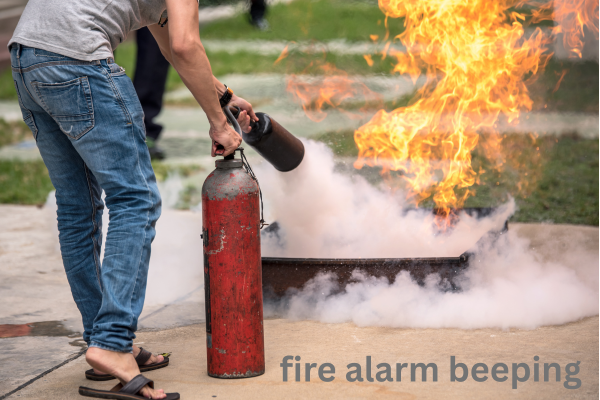
It’s the middle of the night. Your home is quiet, everyone is asleep, and suddenly, beep-beep-beep! You rush to check the kitchen, the hallway, even the garage, but there’s no smoke, no fire, and no burning smell. Yet your fire alarm beeping.
Table of Contents
Most people assume it’s a false alarm and just one of those troublesome devices, but this is a misconception. A fire alarm beeping that sounds without visible smoke is usually trying to convey an important message. Sometimes it’s a simple explanation, other times it’s a warning that shouldn’t be ignored. In this blog, we’ll explore the real reasons why your fire alarm is beeping without smoke, what each beep pattern means, and what you should do to stay safe and maintain peace of mind in your home.
Low Battery: The Most Common (and Most Ignored) Reason.
If your fire alarm is beeping once every 30 to 60 seconds, the most likely culprit is a low battery. Even hardwired fire alarms have backup batteries, and when that battery starts to die, the alarm beeps to get your attention. Most homeowners are surprised to learn that the alarm starts signalling so quickly. A battery might still seem to be working, but the alarm needs a consistent voltage to function correctly in an emergency. Signs of a battery problem: a short beep at regular intervals, no flashing emergency light, and the alarm responds normally when the test button is pressed. How to fix it: Replace the battery with a high-quality one. Avoid mixing old and new batteries. After changing the battery, press and hold the test button for 15-20 seconds.
Pro Tip: Change your alarm batteries twice a year, even if they haven’t started beeping yet.
Dust, Dirt, or Insects Inside the Alarm.
Fire alarm beeping doesn’t need smoke to be triggered; dust, pollen, pet hair, and even molecules can get inside the sensor chamber and trigger a beep or a false alarm. This is most common in homes with pets, older homes, manufacturing facilities, and dusty environments. Both photoelectric and ionisation alarms are susceptible, and dust can interfere with the sensor’s ability to detect air properly. Warning signs: sudden beeping at odd times, beeping increases after cleaning or moving furniture, and the alarm sounds for a short time then stops. How to fix it: Turn off the power (for hardwired units), remove the alarm from its base, use compressed air and a vacuum to clean the vents, and gently wipe the exterior with a dry cloth. Never spray cleaner directly into the alarm; this can damage the sensor.
Humidity, Steam, or Temperature Changes.
Your fire alarm beeping doesn’t just respond to smoke; it also responds to changes in the air. High humidity, steam from showers, and sudden temperature changes can all cause beeping, even without a fire. Common causes include: showering with hot water near a hallway alarm, cooking fumes without smoke, cold air entering during winter nights, and heat build-up in poorly ventilated rooms. This is most common in bathrooms, kitchens, and near HVAC vents. How to help: Improve ventilation by installing exhaust fans, mount the alarm away from sources of moisture, and use photoelectric alarms in kitchens and hallways (they are less sensitive to steam). If the beeping only occurs after showering or cooking, moisture is likely the cause.
Power Issues or Electrical Problems (Hardwired Alarms).
If you have a hardwired fire alarm, it may beep even without smoke if there’s a power interruption. This happens during power outages, power surges, tripped breakers, or loose wiring connections. When the power returns, the alarm may beep to signal a disruption and switch to backup battery mode. Power-related fire alarm beeping indicators: beeping starts after a power outage, multiple alarms beep simultaneously, and the green power indicator light is off or blinking. How to fix: Check your circuit breaker, reset the alarm using the test button, and replace the backup battery. If the beeping continues, contact an electrician. Never ignore a power-related alarm beep; it could indicate a wiring problem.
FAQs.
How do I silence a beeping fire alarm?
To silence a fire alarm beeping, first replace the battery, then press and hold the test/reset button for 15-20 seconds. If the issue persists, clean the alarm’s vents and inspect the unit. The unit’s lifespan has ended.
How do I get my alarm to stop beeping?
To stop your alarm from beeping, replace the battery and try resetting the unit. If the beeping continues, check for dust and debris, investigate moisture and power issues, and replace the alarm if it is old or malfunctioning.
How to stop fire alarm beeping every 30 seconds?
If your fire alarm beeping every 30 seconds, it usually means the battery is low, and the unit needs to be reset. Change the battery, clear the vents, and press the test button to reset it. If the problem persists, the alarm may need to be replaced.
Conclusion:
A fire alarm beeping without smoke is not a random occurrence and should never be ignored, whether it’s due to a low battery, dust and dirt buildup, a power issue, or the end of the alarm’s lifespan. Every beep is a signal that requires attention. The good news is that most causes are easy to fix; you just need to understand what your fire alarm beeping is trying to tell you. Taking some time to investigate, clean, and replace your alarm can save you from sleepless nights, and more importantly, it ensures that your home is truly safe. So, the next time your fire alarm starts beeping for no apparent reason, remember that there’s always a reason, and you’ll know where to look and what to do.
1 thought on “Fire Alarm Beeping but No Smoke? Don’t Ignore These Reasons.”