
Few things are more frustrating than a smoke alarm that keeps going off when there’s clearly no fire, smoke, or danger. It can start beeping in the middle of the night, while you’re cooking, or seemingly at random, leaving you confused and tempted to rip it off the ceiling. While How to Turn Off a Smoke Alarm is essential for safety, a false alarm usually means there’s a simple problem, not that you have to live with the noise.
Table of Contents
The good news is that most smoke alarms go off for easily fixable reasons, from low batteries to steam, dust, and sensor issues. Once you know what to look for, you can usually find a clear cause. In this blog, we’ll explore why your How to Turn Off a Smoke Alarm keeps going off for no reason and how to safely silence it without compromising your safety.
Why Your Smoke Alarm Keeps Going Off Without Smoke.
- Before silencing the How to Turn Off a Smoke Alarm, it’s important to understand why it’s behaving this way. Smoke alarms are designed to be sensitive, and sometimes they react to things that aren’t actual fires. Common causes include:
- Low or dying batteries, even if the alarm is hardwired.
- Steam from showers or cooking, especially in small spaces.
- Dust, debris, or insects inside the sensor chamber.
- Temperature changes, such as cold air entering a warm room.
- Expired smoke alarms, typically those older than 8 to 10 years.
- Electrical problems in hardwired systems.
If your alarm is going off without any smoke, it’s likely reacting to one of these issues rather than a genuine emergency.
How to Turn Off a Smoke Alarm Using the Test or Silence Button.
- The quickest and safest way to stop a Smoke Alarm is to use the test and silence button. Here’s how:
1 – Stand directly below the alarm.
2 – Press and hold the test/silence button for 5-10 seconds.
3 – The alarm should stop and go into silent mode for a short period.
Most modern smoke alarms remain silent for 8-15 minutes before reactivating. This gives you time to clear the smoke, ventilate the room, and identify the cause. If the alarm starts beeping again after a short time, it indicates that the underlying problem has not been resolved.
Replace the Battery (Even If It Doesn’t Seem Low).
- A loose battery is one of the most common reasons a smoke alarm malfunctions. Even if the alarm isn’t chirping, a low battery can frequently cause false alarms.
To fix this:
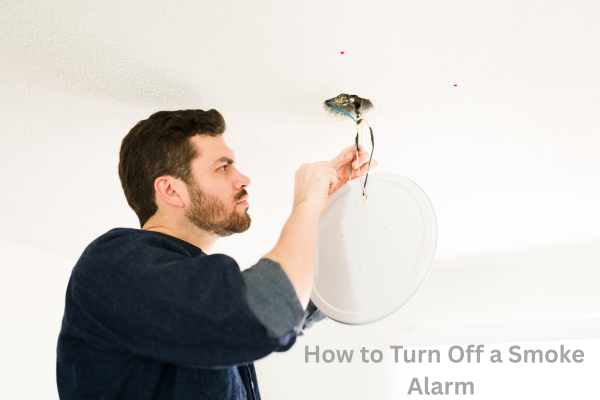
1 – Twist the alarm counterclockwise and remove it from the ceiling.
2 – Open the battery compartment.
3 – Replace the old battery with a new, high-quality battery.
4 – Reinstall the alarm and press the test button.
Backup batteries are also important for hardwired smoke alarms. If it’s loose, the alarm may continue to sound even if the main power is working correctly.
Clean the Smoke Alarm to Stop False Triggers.
- Dust and small particles can easily enter the sensor chamber and trigger the alarm. This is especially common in older homes and rooms with poor ventilation. To clean your smoke alarm:
- Turn off the power at the breaker (for hardwired units).
- Remove the alarm from its base.
- Use compressed air or a vacuum with a soft brush attachment.
- Gently clean the vents and openings.
- Wipe the exterior with a dry cloth.
Avoid using water or cleaning sprays, as moisture can damage the sensor. Cleaning often resolves alarms that are sounding without a reason.
FAQs.-
How to stop a smoke alarm from going off for no reason?
To stop a smoke alarm from sounding without a reason, press the silence button, change the battery, clean the sensor vent, improve ventilation, and check the alarm’s lifespan; old and dusty alarms often give false alarms.
How do you manually turn off a smoke alarm?
You can manually turn off a smoke alarm by pressing and holding the test and silence button for a few moments. If it continues to sound, remove the alarm, change the battery, and for hardwired units, turn off the power at the breaker.
How do I temporarily silence a smoke alarm?
To temporarily silence a smoke alarm, press and hold the silence and test button until it completely stops. Most alarms remain silent for a few minutes, giving you time to clear any smoke or vapor before they automatically reactivate.
Conclusion: –
A How to Turn Off a Smoke Alarm that keeps beeping for no apparent reason isn’t just annoying; it’s a sign that something needs attention. In most cases, the fix is simple: replacing the battery, cleaning the sensor, improving ventilation, or upgrading an older alarm. Instead of completely disabling your smoke alarm, take the time to figure out the cause and fix it properly. A quiet home is great, but a working smoke alarm can save lives. By following the steps above, you can have both peace of mind and safety. If, after checking everything, your alarm is still not working correctly, it’s best to replace it with a new, more reliable model.
1 thought on “How to Turn Off a Smoke Alarm That Keeps Going Off for No Reason.”